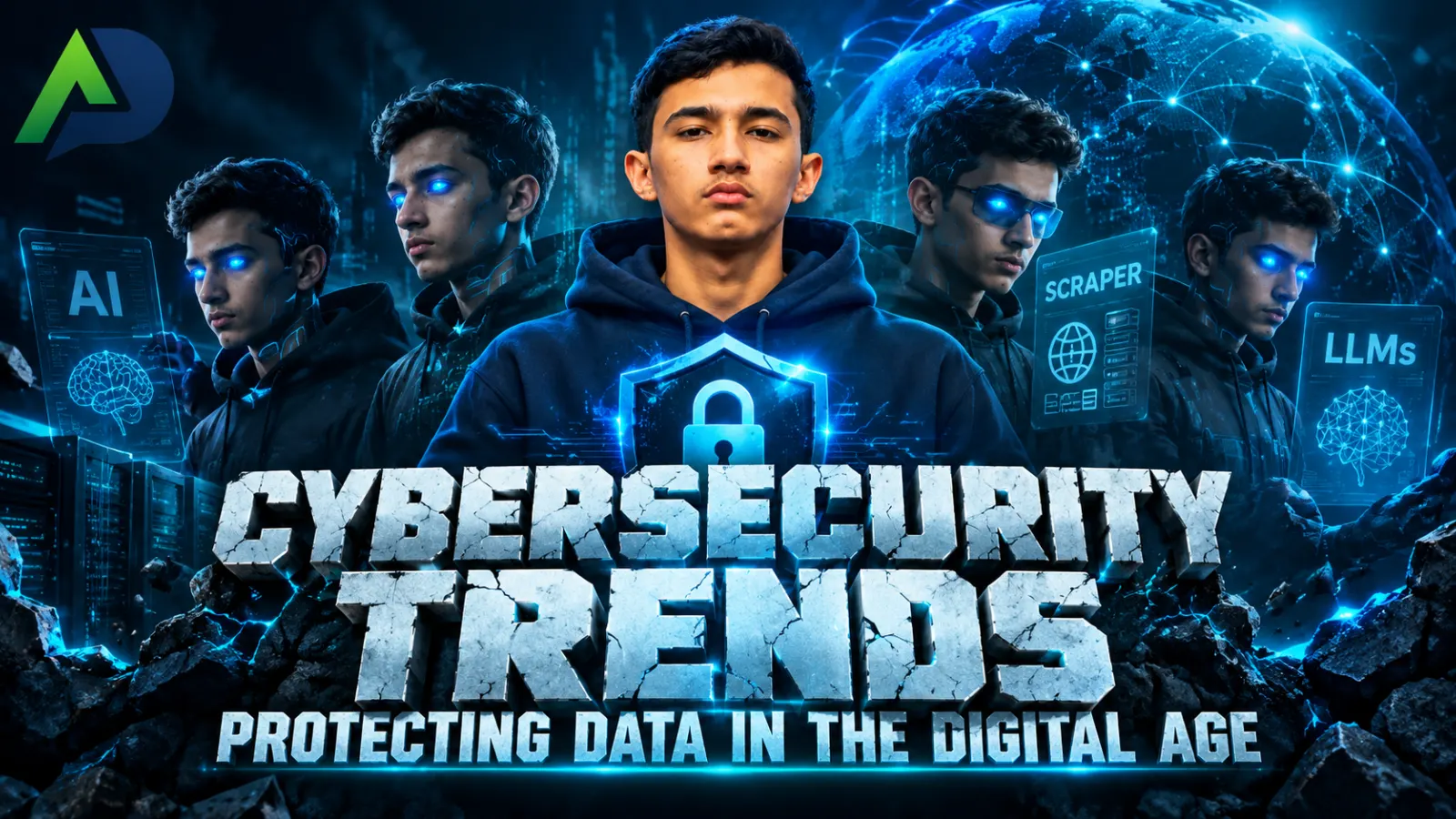

Your Data Is Worth More Than You Think
Imagine someone photocopying your house keys, your bank card, your ID and your diary, then selling the copies to the highest bidder. That is roughly what happens when your data is stolen. Names, passwords, medical records and payment details are the raw material of a global underground economy.
Here is a fun (and slightly unsettling) fact to start with: the first known computer "virus", called Creeper, appeared in the early 1970s. It did not steal anything. It simply displayed a message saying, "I'm the creeper, catch me if you can!" Half a century later, the jokes are gone and the business is serious.
In 2025 alone, the FBI's Internet Crime Complaint Center received more than one million complaints, with reported losses of about $20.9 billion, a 26% jump from the year before. That works out to close to 3,000 complaints every single day. For comparison, the same center reported roughly $1 billion in losses back in 2015.
Let's walk through the biggest trends behind those numbers, in plain English.
Trend 1: AI Is Now on Both Sides of the Fight
Artificial intelligence has become the most talked-about tool in cybersecurity, and not always for good reasons.
According to IBM's 2026 Cost of a Data Breach Report, roughly one in four malicious breaches studied was AI-enabled, a 56% increase over the previous year. Those incidents cost about $6 million on average, around $1 million more than the typical breach. In simple terms, AI lets criminals write convincing messages in any language, generate malicious code faster and test thousands of targets at once, all without needing deep technical skills.
The FBI saw the same shift. For the first time in the report's history, it included a dedicated AI section: more than 22,000 complaints with nearly $893 million in losses. Businesses alone lost over $30 million to scams that used AI to impersonate executives and trick employees into sending money.
But here is the encouraging part. Defenders are using AI too. IBM found that organisations using AI and automation extensively in their security operations saved an average of $1.93 million per breach and contained incidents about 65 days faster than those using none. Think of it as an arms race where both sides have upgraded, and the side that adopts smart tools early wins time, which is the most valuable thing in a cyber incident.
Trend 2: Phishing Grew a Voice, and Maybe a Face
Phishing, the art of tricking people into handing over information, remains the number one way attackers get in. What has changed is the delivery.
IBM's latest data shows that phishing, including voice calls (vishing) and text messages (smishing), is the leading entry point across industries. Even more striking, these voice and text attacks produced the highest average breach cost of any method: $5.29 million.
Why are they so effective? Because we trust phone calls and text messages more than emails. When your "bank" calls in a calm, professional voice, or when a message looks like it came from your delivery company, your guard drops. Add AI voice cloning, which can copy someone's voice from just a short audio clip, and a call from "your boss" or "your grandchild" suddenly feels completely real.
A simple rule that beats most scams: if a message creates panic or urgency, stop. Hang up, then contact the person or company through a number you already trust.
Trend 3: Cybercrime Has Become a Big, Organised Business
Picture a hacker as a lone figure in a dark hoodie? That picture is out of date. Modern cybercrime looks more like a company, complete with specialists, customer support and profit targets.
The FBI's data shows how "industrial" it has become. Investment fraud, much of it involving cryptocurrency, caused the biggest losses at about $8.6 billion. Business email compromise, where criminals pose as a colleague or supplier to redirect payments, came second at roughly $3 billion. Cryptocurrency was involved in over $11 billion of total losses.
Older adults are hit hardest. People aged 60 and above reported about $7.7 billion in losses, the highest of any age group. That is a good reason to have a friendly conversation with the grandparents in your life about the scams below.
There is some good news here as well. The FBI's Recovery Asset Team froze about $679 million in stolen funds in 2025, a success rate of 58% on the cases it handled. The takeaway: reporting a scam quickly, ideally within hours, can genuinely get money back.
Trend 4: The Slow Discovery Problem
Here is a number that surprises most people: it takes organisations an average of 247 days to find and stop a data breach. That is more than eight months of an intruder potentially sitting inside the system.
Worse, that figure went up in 2026 for the first time in five years, according to IBM. Breaches that dragged on for more than 200 days cost an average of $5.65 million, compared with $4.32 million for those contained faster.
It is like a leaking pipe in your wall. A small drip found on day one costs a few dollars to fix. The same drip found months later has ruined the floor. In cybersecurity, speed is money. That is why modern defence is shifting from "keep everyone out" to "spot trouble fast and shut it down."
Trend 5: Shadow AI, the Tool Nobody Approved
If you have ever pasted a work document into a free AI chatbot to summarise it, you may have contributed to a new problem called "shadow AI." It means employees using AI tools that their company never reviewed or approved.
The risk is simple. Once sensitive information, such as customer details, contracts or source code, is entered into an unapproved tool, the company may have no idea where that data goes or who can see it. Security experts reviewing IBM's 2026 findings point to the spread of shadow AI, together with weak basic security controls, as a major reason breach costs hit new highs.
And the AI systems themselves are now targets. IBM notes that attacks designed to extract private training data from AI models cost around $6 million on average. The lesson for businesses: treat AI tools like any other powerful software, with clear rules about what can and cannot be shared.
Trend 6: Healthcare and Finance Stay in the Crosshairs
Why do criminals love hospitals? Because medical records are rich, permanent and urgent. A stolen credit card can be cancelled in minutes, but you cannot change your medical history, and hospitals cannot afford to be offline.
For the 13th year in a row, healthcare had the highest breach cost of any industry, at an average of $6.64 million. Financial services is catching up fast: its average rose to $6.29 million, up from $5.56 million the year before. Critical sectors such as energy and finance were also among the most targeted by AI-driven attacks.
If you work in or depend on these sectors (which is basically all of us), this is a reminder to ask how your provider protects your information, and to use their security features such as account alerts and two-step verification.
Trend 7: The Slow Death of the Password
Here is a fun fact: year after year, "123456" shows up among the most commonly used passwords in the world. Attackers know it, and they try it first.
The industry's answer is to move beyond passwords altogether. Passkeys let you log in with your fingerprint, face or phone's screen lock instead of typing a secret that can be guessed, reused or stolen. They are built so that a fake website cannot trick you into handing them over, which makes them much harder to phish. Major tech companies and banks already support them, and adoption keeps growing.
Until passkeys are everywhere, multi-factor authentication (a second proof of identity, like a code from an app) is the next best thing. It is the digital version of needing both a key and a fingerprint to open a door.
What You Can Do Today: A Simple Personal Checklist
You do not need to be technical to be safe. These habits cover most of what matters:
- Use a password manager. It creates and remembers a unique, strong password for every account, so one leak cannot unlock everything else.
- Turn on two-step verification for email, banking and social media. Email is the most important: whoever controls your email can reset almost everything else.
- Switch to passkeys wherever they are offered.
- Pause before you click or answer. Unexpected urgency, secrecy or requests for money or codes are red flags, even if the voice sounds familiar.
- Agree on a family "safe word". If someone calls claiming to be a relative in trouble, ask for it. Voice cloning cannot guess it.
- Keep devices and apps updated. Updates quietly fix the security holes criminals rely on.
- Be careful what you share with AI tools. Do not paste passwords, ID numbers, or confidential work files into tools you do not fully trust.
- Report scams quickly. If money is lost, contact your bank immediately and file a report with your local cybercrime authority. In the US, that is the FBI's IC3.
What Businesses Should Do
For small businesses and large companies alike, the 2026 data points to a few priorities:
- Detect faster. Since time is the biggest cost driver, invest in monitoring and a practiced response plan, not just locks on the front door.
- Train people regularly. Employees are the main target of phishing. Short, realistic practice beats an annual slideshow.
- Approve AI tools properly. Give staff safe, sanctioned options so they are not tempted to use unvetted ones.
- Encrypt sensitive data. If stolen data is scrambled, it is far less useful to criminals.
- Check your suppliers. Supply chain breaches remain one of the costliest factors, so your security is only as strong as your partners'.
- Verify payment changes by phone. A call to a known number stops most business email compromise fraud.
The Bottom Line
Cybersecurity can sound like a battle between genius hackers and expert engineers, but the truth is much more down to earth. Most successful attacks still work because someone was rushed, distracted or reusing a weak password. The tools are getting smarter, with AI-written scams on one side and AI-powered defence on the other, but the basics of caution still work.
Think of your data like your home. You do not need a fortress. You need good locks, a habit of checking who is at the door, and a plan for what to do if something goes wrong. Start with one change today, whether that is a password manager, two-step login or a family safe word, and you will already be harder to attack than most people online.
References
- eSecurity Planet: IBM 2026 Cost of a Data Breach Report: Key Findings
- SecureWorld: 2026 Cost of a Data Breach Report: AI Wreaks Havoc on Budgets
- FBI Internet Crime Complaint Center: 2025 Internet Crime Report (PDF)
- Help Net Security: Cybercrime losses break the $20 billion mark
Up next
Keep reading.
 01
The New Era of Software Engineering
AI coding agents are changing software engineering. Here’s what this means for developer, student, coding skills & the future of software development.
9 minThe Engineering LogsFirst on Medium
 02
The Art of Object-Oriented Programming
Learn object-oriented programming through classes, objects, encapsulation, inheritance, polymorphism, composition, and practical design principles.
11 minThe Engineering LogsFirst on Medium
 03
How Databases Work: From Tables to Query Execution
Learn how databases work from fundamentals to optimization. Explore SQL queries, indexing, transactions, & database design with real-world examples.
9 minThe Engineering LogsFirst on Medium